

My Story
About Me
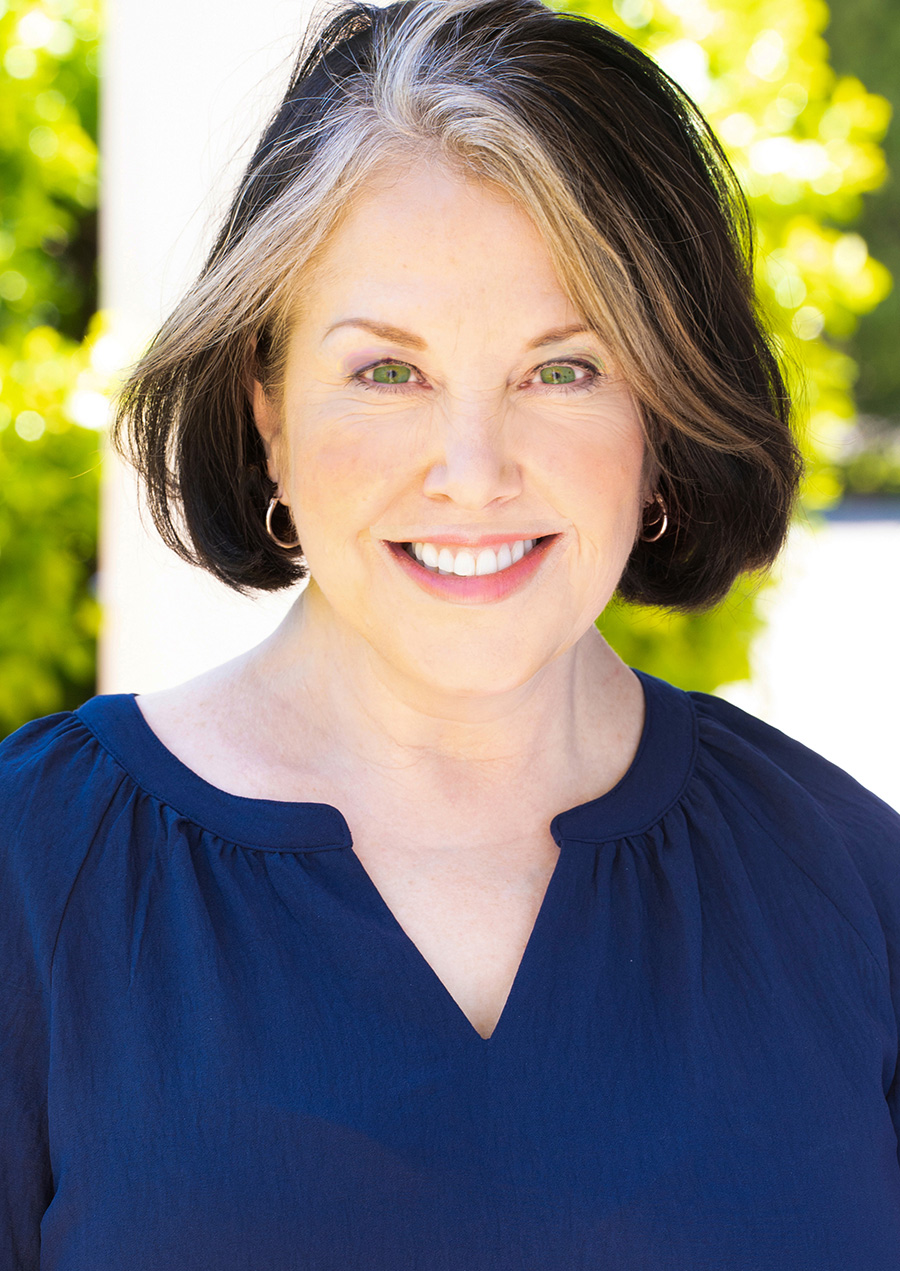
My name is Deirdre Kamber Todd. I grew up in Selinsgrove, Pennsylvania — a small coal-mining and farming town of about 2,500 people in the 1970s. In the 1980s, my father took a job in Allentown, and we moved to the Lehigh Valley. About twenty years ago I married Russ Todd and settled in Schnecksville, in District 183 — my home. Russ' family has spent multiple generations in Slatington; many people still recall Tex Todd's business, H.L. Todd and Sons Excavating, and Barb Todd's Slatington Coin Laundry.
As a small business owner, in 2026 I decided to run for the State House of Representatives of District 183. Sick of the fighting between the parties and the lack of change in critical issues:
- preservation of open spaces
- funding of education
- daily prices
- unaffordable housing
- threats to our rights of responsible gun ownership
- corporate greed in the AI data centers
- the overreaching of the government into our personal lives
Something has to change. I believe we need to support the people, the families, and the land — stop blindly fighting along party lines. I am working for the people, not the parties.
Before the Twin Towers
Growing up in Pennsylvania
At William Allen High School, the large classrooms were a shock after my small-town schooling. I loved Allen — energetic teachers and classmates who were interesting and kind. I served as the Student Representative to the School Board. Little did I know at the time I would be back to assist the Allentown SD School Board, along with the Northwestern Lehigh School Board and other local school boards, years later.
Education and law school
I attended Brandeis University intending to “make it big” in New York as a lawyer — glamorous, to my eighteen-year-old self. After college I earned a master's with honors at the University of Limerick, writing on the political geography of Washington, D.C. Two weeks later I moved to New York for law school. During the summers I worked in Harrisburg for the Pennsylvania Departments of Health and Corrections — drafting regulations, a brief on the John du Pont murder trial, and other government documents.
Taking the job
After law school I took a civil rights job with a firm that had expanded from Long Island into a glass office in the Twin Towers. When I told my mother, she said, “No, you are NOT taking that job. Remember the 1993 bombing? They WILL be back.” I thought she was paranoid. The 1993 attack hadn't seemed to do much damage, and this was a big opportunity. I didn't listen. I took the job.
Working in the World Trade Center
About two years in, I was arbitrating a mass action for three hundred clients against a Fortune 500 company. I met dozens of clients at a time in the WTC office — so many that other lawyers could barely use the space. On September 11, I had ninety clients scheduled throughout the day.
My career was rising, and my personal life matched it. I was engaged; the wedding was set for September 15, 2001. As the date approached, I chose to work from Long Island on the 11th. My secretary and I moved my meetings to the following week so I could handle wedding plans. I didn't know it then, but that last-minute change left my office completely empty on 9/11.
9/11 Changed Everything
The morning of September 11
It was a clear Tuesday. From my home about twenty miles away, I could see the Twin Towers. As I was leaving for work around 9 a.m., the news reported that a small plane had hit the North Tower — perhaps a drunk private pilot. I ran outside and saw dark smoke gathering around the building. Back inside, glued to the coverage, I watched the fire spread. Friends who worked at the WTC called one another. We thought it was a terrible accident. I told my friend Ann, “It doesn't look that bad. I'm sure my office will still be accessible. They can fix it.” That was 8:46.
I drove to our local office down the street. Everyone was watching the news. My boss told me a second plane had hit the South Tower. “It isn't an accident,” he said. In that instant we knew we were under attack. Our lives changed permanently.
We're Under Attack
Just after 9:00 I went home to follow the news and reach people — including my mother, to say I wasn't at the tower. Workers and visitors were fleeing; we feared for those trapped above the fires. Shortly after 9:30, a plane hit the Pentagon. Reports confirmed these were commercial airliners, not private planes. Multiple aircraft had been hijacked; no one knew how many. It felt as if the entire country was waiting for the next strike.
At 9:59 the South Tower collapsed. I called my mother before my phone became a continuous ringtone — told her the WTC and Pentagon were under attack, and that I was home and safe. In the background I heard, “Another plane has crashed somewhere in Pennsylvania.” At that same moment cell service failed — not only mine; all phone service went down. All I could think was: Where in Pennsylvania? The Lehigh Valley sits between New York, Washington, and Philadelphia. It could have been a target. Years later I learned that nearly all of New York's cell towers had been at the Twin Towers.
Trapped on Long Island
Around 10:30, news reported that my office building — the North Tower — had also collapsed. Reports said five planes had been hijacked; four had already crashed, and a fifth was said to be over Long Island — then that report vanished. We were told to expect another attack within forty-eight hours, while we were still weakened.
That evening came another shock: 7 World Trade Center collapsed. It hadn't been hit by a plane, and at forty-seven stories it was far shorter than the Twin Towers. The Port Authority and the EEOC had offices there. Between the missing fifth plane and that collapse, some people began to distrust what we were being told.
We were stuck in Long Island with a bomb in our midst. Bridges and tunnels off Long Island were closed. Planes nationwide had been grounded, yet we remained trapped — with that unresolved fifth-plane report and dead cell phones. It was the scariest, and somehow quietest, moment of dread I have ever known. From my apartment, a bubble of yellow dust hung over the city. The skyline had already changed.
The Aftermath
Flight 93 and the stories that followed
In the weeks that followed, cell service returned and we tried to find a new normal. There had been no further attack — a huge relief. I reached my mother and knew my family was safe. The news of Flight 93, though, was devastating. After leaving Newark, the crew and passengers learned they had been hijacked. In an act of extraordinary courage, they fought back and brought the plane down before it could hit its target. Hundreds of other stories, from tragedy to miracle, began to emerge. For every story with a happy ending, dozens more were horrifying.
A wedding on September 15
My wedding was still scheduled for Saturday the 15th. I had no idea what to do — hold the event for a small bit of light in the darkness, or cancel it? Was it in good taste, or bad? The upstate New York location was available; dinner and the officiant were willing to come. Nearly everything else was cancelled. No one could fly in. Was it fair to ask people to find other transportation?
Friends and family all wanted it — a little happiness in the chaos. We held the event with nearly full attendance, and donated what we could to first responders and survivors: the food, the flowers, and money from gifts and cancelled contracts.
Returning to the city
When I returned to work in the City a week or two later, the drive had changed: military personnel stood with guns at every entrance. Racial profiling and fear of vans were pervasive. Even though my office was gone, I had been arbitrating my cases two blocks away, near the Financial District. We kept working, but every day held some horrible reminder — abandoned cars, fine dust, yellow air, piles of ruins and body parts. We attended funerals and met with friends still searching for spouses and loved ones. In every part of our lives, we lost some people and found others who had been presumed gone.
On my first day back to work on my case, I met with the arbitrator handling my cases. Her office was mostly windows; she described watching the plane fly down the street and into the Trade Tower. Her stories were terrifying, and she was clearly traumatized. We cancelled work for the day, and she took a week off. When we resumed, I asked how she was feeling. She looked refreshed and said she was fine — that she had been home on 9/11 and hadn't seen anything. Her reaction shocked me, but I understood what must have happened: her mind could not absorb what she had witnessed, so it rewrote the script of her experience.
A new normal
As months passed, we calmed. Life went on. We got over our fear of another attack, bonded together, and found a new normal. Part of that became a commitment to honoring first responders — including many from Pennsylvania who came to help after 9/11. I vowed to help them if and when I could.
Coming Home
New York's yellow air lasted far longer than anyone expected; we knew we were breathing toxicity. In March 2002, I learned I was pregnant. I was willing to breathe that air myself, but not willing to do that to my unborn son. I decided it was time to come home — to the Lehigh Valley. My husband was not coming with me, so I would do this on my own.
I moved home with nothing but my son: no job, no money, and unable to practice law in Pennsylvania without taking the bar exam. I lived with my family and started from the bottom. One day the reality hit me. I was driving and wanted to stop for a McDonald's soda — then realized that if I bought the soda, I could not afford my son's formula that night. I could not hold a job, study for the Pennsylvania bar, and afford daycare at the same time. I know what it is to restart from the bottom.
A Family Created
In 2010, I met Russ Todd — a Slatington engineer who had lived around the corner from me ten years earlier. Within a year we were building a life together. With our wonderful children and two giant, sweet dogs, I have been blessed with an amazing family.
Setting Down New Roots
I passed my necessary exams and became a business, healthcare, education, and civil rights lawyer in the Lehigh Valley. First with King Spry, then other firms, I eventually opened my own office, The Kamber Law Group, with my partner and mother. Many local first responders were fighting desperate fights over the health impact of Ground Zero, with no workers' compensation available. When a WTC Fund was established, I assisted them in obtaining benefits for little or no money, and offered discounts to first-responder clients regardless of their concerns — my small way of repaying their work.
Finding Fraud
During COVID, I decided to pivot from law into fraud investigations. I went back to school and became a Forensic Document Examiner. My job is to detect authenticity and fraud in writings. After handling a broad array of cases, I grew focused on a cold case from almost 100 years ago: the unsolved murder of the Lindbergh baby in New Jersey. For the past several years, I have been working on my book, The Curse of St. Lindbergh.
Collecting the Past
Upon settling at home in the Lehigh Valley, I began collecting WTC items — starting with my own — knowing many would be tossed out, degrade, or never be released to the public. I focused on the beauty and message of World Trade: working together, building on strong foundations, and creating beauty out of ruin. The collection is generally child-friendly, so the next generation can learn from the past.
Running for Office
In February 2026, I was asked by the HDCC to run for State Representative of District 183. This year I have focused on the issues that plague our district: AI data centers, daily prices, healthcare coverage, open space, unaffordable housing, threats to our rights of responsible gun ownership, funding of education, and preventing government overreach into our personal lives. Tired of both parties fighting and getting little done, I believe we are beyond party labels. We need to work together and get things done for our community — For the People, Not the Parties.
Visit my website at www.DKT4PA.com